

Celebrating the Trailblazing Role of Women in Global Health Insurance & Protection Part 1
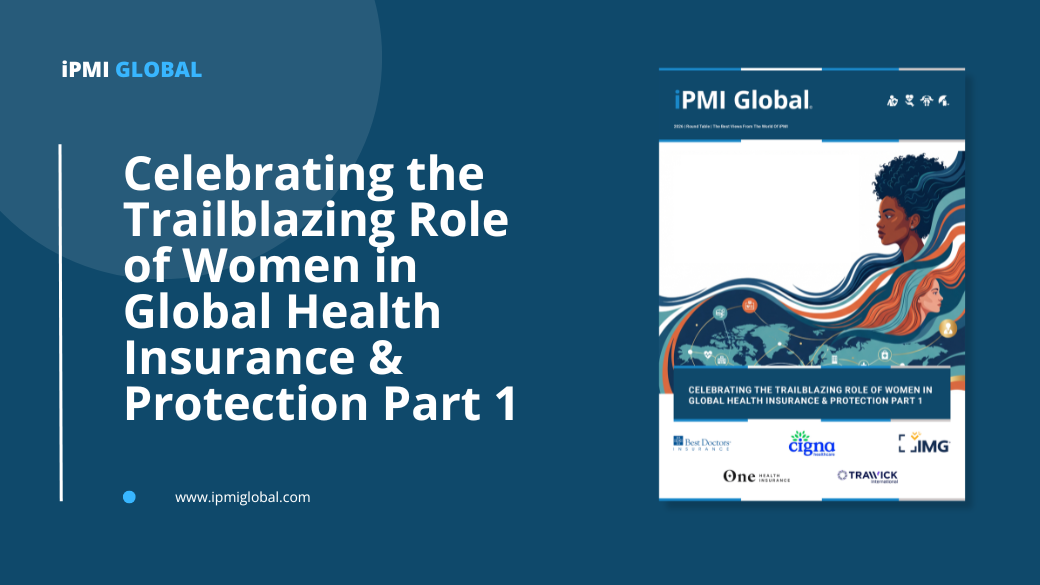
Celebrating the Trailblazing Role of Women in Global Health Insurance & Protection Part 1
In 2026, the International Private Medical Insurance (iPMI) sector stands at a pivotal strategic inflection point.
BATH, UNITED KINGDOM, October 22, 2026 /EINPresswire.com/ -- As conformed by iPMI Global CEO Christopher Knight, the structural evolution of female executive leadership across the international health insurance architecture is far from a passive corporate governance exercise; it represents an urgent operational and economic imperative tied directly to enterprise value creation. Historically, the global health insurance ecosystem was constrained by rigid corporate hierarchies, insular leadership networks, and isolated actuarial silos that restricted product innovation, slowed digital systems modernization, and impaired operational agility.
The sector is undergoing a necessary transition from passive gender representation to active economic authority within C-suites and boardrooms. Traditional corporate frameworks that confined female executives to non-revenue management functions without core financial oversight are rapidly giving way to performance-driven governance structures. Embedding structural modernization, operational accountability, and equity-driven decision-making into top-tier executive leadership is vital for safeguarding capital, optimizing international medical delivery, and securing sustained enterprise value in an increasingly complex global regulatory market.
Overcoming these legacy constraints directly correlates with enhanced profit and loss (P&L) performance, superior underwriting discipline, sharper risk mitigation, and measurably improved clinical outcomes for globally mobile populations. Sustainable corporate growth and competitive differentiation are achieved only when equity-driven product design and inclusive governance are systematically aligned with P&L execution.
Celebrating the Trailblazing Role of Women in Global Health Insurance & Protection Part 1
Round Table Executives
Monica Rummelhoff, Executive Director, GMMI/Redion
Gitte Bach, CEO, New Frontier Group
Natalya Butakova, CEO, AP Companies
Jennifer Milton, CEO, Compass Point Assist
Caroline Broms, Senior Demand Generation Manager, Flywire
Jane Hegeler, Head of Account Management, ICE-Tech Denmark
Sabine Radun, Managing Director, VIA Valora International Assistance
The deep, frontline operational backgrounds of these executives demonstrate how direct field experience in high-stakes environments translates into effective C-suite governance, driving structural modernization across the entire global insurance value chain.
Systemic Shifts & Critical Gaps in IPMI Executive Governance
Introductory Context & Strategic Importance
The international health insurance sector is undergoing a necessary transition from passive gender representation to active economic authority within C-suites and boardrooms. Traditional corporate frameworks that confined female executives to non-revenue management functions without core financial oversight are rapidly giving way to performance-driven governance structures. Embedding structural modernization, operational accountability, and equity-driven decision-making into top-tier executive leadership is vital for safeguarding capital, optimizing international medical delivery, and securing sustained enterprise value in an increasingly complex global regulatory market.
Analytical Breakdown of Market Transformation Drivers
Local Talent Cultivation vs. Expatriate Appointments: Natalya Butakova highlights a fundamental shift in regional corporate expansion strategies over the past two decades. Historically, international insurance carriers routinely filled regional or country leadership roles by deploying male expatriate executives from headquarters under lucrative relocation packages. Today, multinational organizations increasingly identify, cultivate, and promote high-performing local market talent who possess granular knowledge of regional healthcare delivery systems, regulatory nuances, and provider dynamics. This internal talent pipeline frequently consists of female leaders who have risen through operational ranks and now successfully compete for executive positions against traditional international candidates. Crucially, Butakova emphasizes that this transformation is even permeating historically male-dominated commercial lines such as the maritime insurance sector, where female decision-makers are increasingly steering global health management strategies—a compelling barometer of systemic industry modernization.
System Modernization & Integrated Thinking: Caroline Broms notes that the escalating complexity of managing cross-border receivables, multi-currency cash flows, distributed banking relationships, and legacy back-office platforms has generated an urgent demand for systems-level strategic thinkers. Modernizing cross-border operations requires leadership capable of simultaneously connecting financial technology, operational workflows, regulatory compliance, and policyholder experience. This operational imperative, combined with post-pandemic digital adoption and intensified investor scrutiny surrounding ESG and governance metrics, has propelled female leaders who excel at holistic operational integration into key C-suite roles.
Economic Authority and Ownership: Gitte Bach establishes a vital distinction between securing "a seat at the table" and possessing the commercial leverage to "shape the table." True structural transformation requires moving beyond symbolic title representation to obtain direct P&L ownership, commercial decision-making authority, and control over capital allocation. Female executives who establish independent entities or assume full P&L responsibility gain the structural power to determine capital deployment, evaluate risk selection, negotiate critical contracts, and dictate long-term corporate strategy.
Evaluation of Persistent Industry Gaps
P&L Control and Commercial Responsibility: Both Jennifer Milton and Sabine Radun warn against mistaking heightened corporate visibility or senior titles for genuine operational authority. A significant structural gap persists in granting female leaders direct control over underwriting guidelines, financial P&Ls, actuarial strategy, and investment allocation. Substantive industry evolution occurs only when executive positions carry concrete financial accountability and top-tier decision-making power.
Retention Bottlenecks in Technical Roles: Caroline Broms identifies a critical structural paradox within technical disciplines such as underwriting, actuarial science, systems architecture, and medical director roles. Organizations routinely leverage the operational competence of technical female talent by pulling them into high-stakes digital transformations, system migrations, and special modernization projects. However, upon successful delivery, these leaders face a career-limiting trap: they are praised for project execution but subsequently passed over for core P&L and operational leadership roles under the pretext of being "special project managers" who are "not technical enough for operations leadership." This succession planning failure creates a major retention bottleneck in technical tracks.
Regional Disparities in Governance: Caroline Broms highlights a pronounced geographic imbalance in executive advancement. While female representation on executive boards and C-suites has expanded within North America and Western Europe, severe underrepresentation persists across Asia-Pacific and emerging markets. This geographical governance imbalance creates a critical strategic blind spot in cross-border risk management, as the regions exhibiting the highest market growth, operational complexity, and regulatory fluidity are deprived of diverse strategic perspectives at the board level.
Navigating these persistent governance gaps directly influences how executive leaders execute cross-border operational strategies and maintain credibility when entering complex international regulatory environments.
Navigating Cross-Border Cultural Dynamics & Regulatory Environments
Introductory Context & Strategic Importance
Operating across diverse international health insurance jurisdictions requires managing cross-border operations, regulatory bodies, and medical networks in regions characterized by starkly contrasting cultural norms and expectations regarding gender roles. Cross-border executives must deploy advanced cultural intelligence and tactical adaptability to negotiate multi-million-dollar provider contracts, manage acute medical crises, and lead local operational teams without diminishing their executive authority or compromising rigorous corporate standards.
Strategic Approaches to Cross-Border Cultural Navigation
Cultural Intelligence without Self-Diminishment: Monica Rummelhoff and Gitte Bach emphasize that cross-border executive leadership demands active listening, adaptability, and deep respect for local business etiquette. However, adapting communication styles to local market dynamics must never involve surrendering executive authority, technical expertise, or operational standards. Executive credibility is established through consistent preparation, deep domain knowledge, and delivering promised financial and clinical outcomes regardless of localized conference room expectations.
Personal Background as Cultural Connection: Natalya Butakova (born and raised in Turkmenistan) and Sabine Radun (with personal roots in Kosovo) demonstrate how personal familiarity with traditional, high-context societies serves as a strategic asset. Understanding traditional social structures allows leaders to navigate local business customs with genuine respect while maintaining clear professional boundaries. This innate cultural literacy bridges communication divides, neutralizes potential gender friction, and converts initial hesitation into mutual commercial respect.
Operational Competence as Universal Currency: Jennifer Milton, Jane Hegeler, and Sabine Radun establish that deep subject-matter expertise and operational execution transcend cultural barriers. Drawing from extensive frontline experience—such as Jane Hegeler managing medical assistance hubs, workers' compensation claims, and complex evacuations across high-risk and hostile environments including Afghanistan, Iraq, Syria, Sudan, Pakistan, and Bangladesh—these executives demonstrate that in high-stakes operational environments, technical competence is the ultimate equalizer. Tactically, Hegeler navigated traditional regions by thoroughly researching local customs, adapting cultural dress (such as covering her shoulders or hair where appropriate), meeting directly with UN representatives and Ministries of Health, and strategically utilizing senior male co-executives to satisfy local protocol requirements without ceding decision-making control.
Organizational Scaffolding and Local Alliances: Caroline Broms highlights that deploying female executives into complex international markets without structured organizational backing leads to avoidable friction. Successful cross-border expansion requires building robust local networks, engaging female mentors, and establishing intentional organizational scaffolding. Carriers that provide structured cross-cultural coaching and cultivate local female alliances achieve faster market integration, superior compliance, and more effective technology deployment.
Establishing operational authority and cultural fluency across international jurisdictions provides the essential foundation required to challenge legacy underwriting frameworks and modernize health insurance product design.
Modernizing IPMI Product Design: Expanding Beyond Maternity to Lifelong Women's Health
Introductory Context & Strategic Importance
Historically, global health insurance product architecture evaluated women's health through a highly restrictive lens, isolating coverage primarily to basic maternity riders or treating specialized care as capped, non-standard benefits. Modernizing product design to encompass the complete female biological lifespan is both a clinical necessity and a fundamental commercial imperative. Female policyholders represent half of the global covered population; designing coverage around their full health spectrum directly enhances policyholder retention, optimizes claims expenditure, and aligns product architecture with modern healthcare economics.
Maternity-Centric vs. Lifelong Health Spectrum: Monica Rummelhoff, Gitte Bach, and Sabine Radun contrast legacy product frameworks—which relegated female healthcare to basic maternity riders—with modern, lifespan-oriented product designs. Modern frameworks integrate coverage for fertility preservation, perimenopause, menopause management, hormone replacement therapy (HRT), endometriosis care, mental health support, and post-menopausal bone and cardiovascular health, supporting members through every career and life stage.
Exclusions vs. Essential Healthcare: Natalya Butakova fundamentally challenges the traditional economic logic of excluding contraception, fertility diagnostics, and hormonal treatments. From a healthcare economics perspective, restricting essential reproductive and hormonal care is counterproductive. Early diagnostic interventions, hormonal stabilization, and preventative management carry significantly lower costs than funding reactive crisis interventions for unmanaged, advanced chronic conditions or secondary medical complications resulting from delayed care.
Clinical Protocols for Chronic Conditions & Risk Mitigation: Caroline Broms details how female actuaries, underwriters, and medical directors are fundamentally reforming clinical protocols. Modern product design replaces dismissive diagnostic patterns regarding chronic conditions like endometriosis and menopause with evidence-based clinical pathways. This includes explicit policy benefits for egg freezing, fertility counselling, bone density screening, cervical cancer screenings, breast density screenings, and preventative cardiology for postmenopausal women. From an analyst's perspective, aligning benefit schedules with female biological risk profiles acts as a powerful risk-mitigation strategy that lowers long-term claims severity, optimizes the carrier's cost-to-serve, and significantly drives member retention and plan renewal rates.
Care Navigation and Operational Delivery
Gitte Bach, Jennifer Milton, and Sabine Radun stress that incorporating expanded wording into benefit schedules is entirely meaningless without active, frontline operational execution. Sabine Radun succinctly captures this operational reality: "Insurance is ultimately a promise made on paper. Assistance is the moment that promise is kept." Reinforcing this principle, Gitte Bach affirms that "Coverage without access is only a promise on paper."
Delivering meaningful healthcare to globally mobile members requires sophisticated care navigation, 24/7 bilingual assistance, direct digital health and telehealth routing, rapid second medical opinion protocols, localized provider network integration, and cashless medical access technology. These operational capabilities are required to resolve real-world language barriers, regional facility disparities, and complex administrative friction at the point of care.
Translating modern product architecture and operational care delivery into concrete enterprise value requires actionable, board-level strategic directives.
Strategic Takeaways & Operational Imperatives
Introductory Context & Strategic Importance
The operational intelligence synthesized in this report demonstrates that executive diversity, direct frontline operational experience, and modern, lifespan-oriented product engineering are primary drivers of financial performance, risk mitigation, and enterprise resilience across the global health insurance ecosystem.
Key Actionable Imperatives for IPMI Stakeholders
Assign Commercial P&L and Underwriting Accountability: Transition organizational governance initiatives from symbolic representation to absolute commercial authority. Reflecting the consensus articulated by Gitte Bach, Sabine Radun, and Jennifer Milton, corporate boards must systematically appoint female executives to roles controlling financial P&Ls, actuarial risk selection, commercial strategy, underwriting guidelines, and corporate capital allocation.
Eliminate Technical Career-Limiting Patterns: Address the retention bottleneck identified by Caroline Broms by restructuring executive succession pipelines. Carriers must ensure that female leaders in technical disciplines—including underwriting, actuarial science, software architecture, and medical direction—who are tapped to lead complex digital and operational transformations are provided direct pathways to core operational C-suite positions, rather than being sidelined as permanent project execution managers.
Redesign Products around Healthcare Economics: Modernize standard benefit schedules to encompass the full female lifespan, as urged by Natalya Butakova, Monica Rummelhoff, and Caroline Broms. Incorporating explicit coverage for fertility treatments, menopause care, endometriosis pathways, bone density monitoring, breast density screening, and postmenopausal cardiology serves as a direct risk-mitigation strategy that reduces long-term claims severity and maximizes policyholder retention.
Invest in Local Scaffolding and Cultural Intelligence: Support cross-border market expansions and global technology deployments by building structured organizational backing, as detailed by Caroline Broms, Jane Hegeler, and Monica Rummelhoff. Insurance carriers must establish local mentorship networks, regional female leadership alliances, and targeted cross-cultural coaching to accelerate market penetration and ensure smooth operational execution in complex regulatory environments.
About iPMI Global
iPMI Global is the leading buisness intelligence platform for the international private medical insurance and global healthcare sectors. By providing deep-dive reports, expert round tables, and real-time industry news, iPMI Global empowers decision-makers to navigate the complexities of global health insurance and expatriate care.
C Knight
iPMI Global
+44 20 8068 4042
Visit us on social media:
LinkedIn
YouTube
Legal Disclaimer:
EIN Presswire provides this news content "as is" without warranty of any kind. We do not accept any responsibility or liability for the accuracy, content, images, videos, licenses, completeness, legality, or reliability of the information contained in this article. If you have any complaints or copyright issues related to this article, kindly contact the author above.
