
Tired of Peeling - The Ultimate Guide to Achieving Perfect UV Ink Adhesion on Difficult Substrates | MYRIAD MINDED
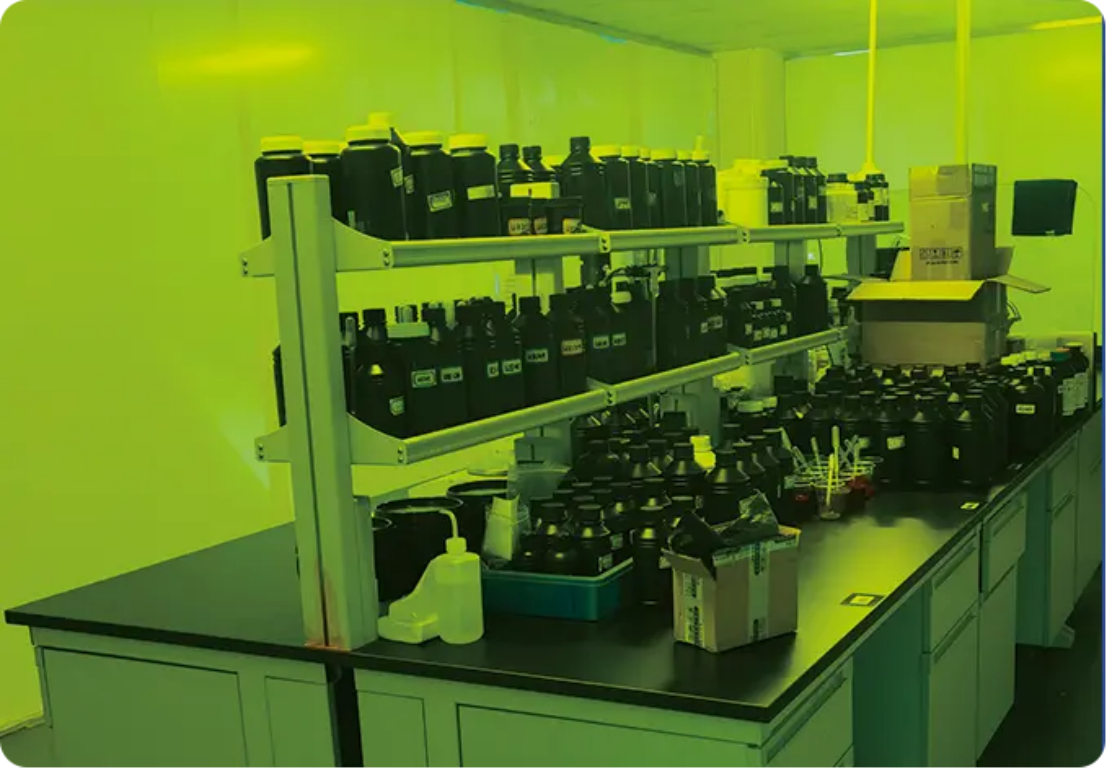
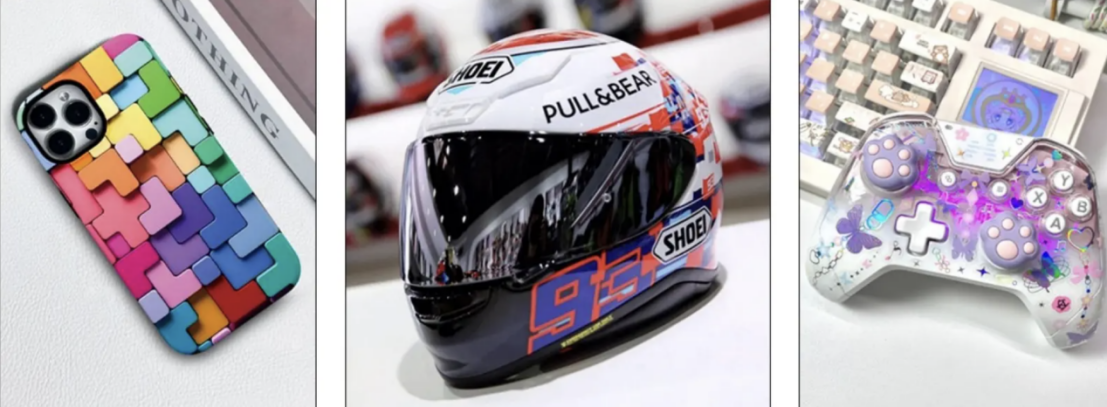
Achieving a flawless bond requires a deep understanding of ink formulations and substrate behaviors. To consistently secure a Perfect UV Ink Adhesion, printing operations must transition from standard generic inks to advanced, application-specific formulations. High-quality digital ink consumables are designed to balance flexibility, surface tension, and polymer cross-linking. Modern industrial solutions, such as the comprehensive portfolios manufactured by MYRIAD MINDED, demonstrate how precision chemical engineering resolves common adhesion failures across advertising, textiles, and packaging. Rather than relying on trial-and-error adjustments or heavy coats of manual primers, achieving peak print performance depends on matching the mechanical properties of the cured ink film with the structural properties of the target substrate.
The Chemistry Behind Surface Energy and Wetting
To understand why UV ink peels, it is helpful to look closely at the molecular mechanics of the print interface. The success of any inkjet application depends on "wetting"—the physical ability of a liquid droplet to spread evenly across a solid surface instead of remaining in a tight bead. Wetting is governed by surface energy, which is measured in millinewtons per meter (mN/m) or dynes per centimeter (dyn/cm). As a general technical benchmark, for an ink to wet a surface properly, the surface energy of the substrate must be at least 10 dyn/cm higher than the surface tension of the liquid ink.
Standard substrates like untreated polypropylene, acrylic, glass, and powder-coated metals frequently possess very low surface energies, often dipping below 30 dyn/cm. Conversely, standard industrial UV inks may have surface tensions ranging from 25 to 35 dyn/cm. When these two values are too close, the ink cannot spread. Instead, the individual droplets minimize their surface area, forming spherical beads that fail to penetrate the microscopic pores of the material. This lack of initial physical contact prevents the ink from forming a strong mechanical interlock or establishing covalent chemical bonds during the subsequent UV curing phase, leaving the printed layer highly vulnerable to scratching and peeling.
Addressing the Unique Challenges of Specialized Materials
Different difficult substrates introduce distinct obstacles to the printing process, requiring tailored mechanical or chemical adjustments:
Non-Porous and Smooth Surfaces: Materials such as tempered glass, ceramics, and stainless steel lack the natural microscopic porosity found in paper or wood. This smooth profile prevents the ink from achieving mechanical interlocking. Furthermore, these materials act as heat sinks, drawing thermal energy away from the print surface and potentially altering the cross-linking behavior of the UV polymers.
Low Surface Energy Plastics: Polyethylene (PE) and polypropylene (PP) feature inert chemical structures that naturally resist bonding with external substances. Without specialized surface modification—such as corona treatment, flame treatment, or targeted chemical priming—inks simply sit loosely on top of these plastics, making them easy to scrape off.
Flexible and Elastomeric Substrates: When printing on flexible films, leather, TPU, or soft plastics, the cured ink film must bend alongside the underlying material. If a brittle, rigid UV ink formulation is applied to a flexible substrate, the print will crack and peel the first time the item is bent or stretched.
To overcome these obstacles, operators must adjust their curing profiles and use inks designed with optimal molecular flexibility. Advanced curing systems, particularly LED-UV units, play an important role here. Unlike traditional mercury vapor lamps that emit broad-spectrum infrared heat, LED-UV units deliver cool, narrow-band wavelengths (typically 365nm or 395nm). This targeted delivery allows for thorough polymerization throughout the entire depth of the ink layer without exposing heat-sensitive plastics to thermal distortion, ensuring a uniform and durable bond.
Technical Innovation and Formula Optimization in UV Inks
Resolving these adhesion issues permanently requires a focus on advanced ink chemistry and formulation stability. This is where specialized manufacturers focus their research and development. To prevent ink separation and ensure consistent jetting performance through industrial printheads (such as Epson or Kyocera), the raw pigments must undergo advanced dispersion processes. Utilizing automated milling and automated packaging systems helps minimize machinery downtime while preventing the agglomeration of particles that can lead to misdirected droplets or clogged nozzles.
A notable example of this technical balance is found in specialized UV DTF solutions. The UV DTF printing process involves jetting high-adhesion flexible UV inks directly onto a release film (Film A), applying a precise layer of UV varnish to protect the graphics and build dimensional texture, and then laminating the design with an adhesive transfer film (Film B). The user can then peel the graphic and press it directly onto difficult, irregular, or curved surfaces without needing to fit the entire object inside a flatbed printer.
For this multi-layer structure to succeed, the ink must maintain high color density and a wide color gamut while remaining highly flexible. The cured ink film cannot be rigid; it must retain a calculated elasticity to endure the shear forces applied during lamination and final transfer. This flexibility prevents micro-cracking along the edges of fine text and complex geometric logos, ensuring clean transfers even on challenging items like textured ceramics, insulated stainless steel flasks, and curved glass containers.
Actionable Best Practices for Peak Printing Performance
To eliminate ink peeling and ensure reliable adhesion on difficult substrates, production facilities should implement the following technical steps:
Perform Surface Tension Verification: Before starting a production run on an unfamiliar or challenging substrate, use Dyne test pens to measure the surface energy of the material. If the surface energy measures below 40 dyn/cm, apply a corona pre-treatment, flame treatment, or a material-specific chemical primer to raise the surface energy to an optimal level.
Calibrate the UV Curing Output: Routinely measure the irradiance (measured in milliwatts per square centimeter, or mW/cm2) and energy density (measured in millijoules per square centimeter, or mJ/cm2) of your LED-UV or mercury lamps using a calibrated radiometer. Undercuring leaves unreacted monomers at the substrate interface, leading to poor adhesion, while overcuring can make the ink film overly brittle and prone to cracking.
Maintain Environmental Stability: Keep your print shop within an optimal temperature range of 20°C to 25°C and a relative humidity of 40% to 60%. Fluctuations in temperature alter ink viscosity, which can disrupt droplet formation, while excess humidity can introduce microscopic moisture layers on substrates, blocking proper adhesion.
Adopt System-Matched Ink Solutions: Avoid mixing components from different manufacturers. Using single-source, matched sets of white ink, color ink, and varnish ensures chemical compatibility, consistent cross-linking during curing, and optimal mechanical performance over time.
By focusing on precise surface preparation, using carefully engineered ink formulations, and maintaining strict control over the curing environment, printing companies can overcome the challenges of ink peeling. This systematic approach allows businesses to unlock new revenue streams by confidently printing durable, high-impact graphics on even the most challenging industrial and decorative substrates.
For more information regarding high-performance digital ink solutions and global supply support, please visit the official company website at https://www.myriadminded.com/
Myriad Minded Colors Technology (Zhuhai) Co., Ltd.
Myriad Minded Colors Technology (Zhuhai) Co., Ltd.
email us here
Legal Disclaimer:
EIN Presswire provides this news content "as is" without warranty of any kind. We do not accept any responsibility or liability for the accuracy, content, images, videos, licenses, completeness, legality, or reliability of the information contained in this article. If you have any complaints or copyright issues related to this article, kindly contact the author above.
